



If enacted, it will ensure that Australia doesn’t fund, arm, or invest in illegal settlements, war crimes, or genocide
— anywhere in the world.

Legislation
Bill 1 of 4
Defence Trade Controls Amendment (War Crimes, Crimes Against Humanity and Genocide) Bill 2026
To prevent Australia from enabling genocide or war crimes through defence exports.
- Prohibits defence exports where there is a risk of genocide, war crimes, or crimes against humanity.
- Minister must not issue permits if such a risk is present.
- Requires a public register of permits and key decisions.
- Requires end-use certificates.
- Criminal and civil penalties for non-compliance – including for government officials.
- Related amendments to the Customs Act to strengthen enforcement.
This bill closes critical gaps in Australia's defence export controls, ensuring compliance with international law obligations under the Genocide Convention and Geneva Conventions.
Bill 2 of 4
Genocide Reporting, Prevention, and Restitution Bill 2026
To ensure Australian institutions do not contribute to or benefit from genocide through greater transparency.
- Annual Genocide Statements required from Commonwealth entities, large businesses, defence businesses, universities, and the Future Fund.
- Broader scope than the Modern Slavery Act: covers entire value chain, not just supply chain.
- Establishes Anti-Genocide Commissioner.
- Positive duties on senior managers to prevent genocide risks.
- Prohibition on complicity in any practices that may contribute to genocide.
- Includes criminal penalties, civil remedies, and judicial review rights.
Creates Australia's first comprehensive genocide prevention framework, moving beyond reactive measures to proactive duty.
Bill 3 of 4
Treasury Laws Amendment (Divesting from Illegal Investments) Bill 2026
To prevent public funds from supporting illegal settlement activity and genocide risk.
- Prohibits Future Fund, superannuation entities and charities from funding or investing in companies complicit in illegal settlements.
- Bans resources going into illegal settlement activity.
- Prohibits resources going into entities engaging in practices that may contribute to genocide.
- Requires immediate divestment from such investments once identified.
Ensures Australian public funds and charitable donations do not inadvertently finance violations of international law.
Bill 4 of 4
Occupied Territories Goods and Services (Import Prohibition) Bill 2026
To prohibit the importation and trade of goods and services originating from occupied territories and to ensure Australia complies with its obligations under international law, including the duty of non-recognition of unlawful territorial acquisition.
- Criminalises importing, selling, or assisting trade in settlement goods.
- Prohibits acquisition or provision of services linked to illegal settlements.
- Bans extraction of natural resources from occupied territories.
- Applies to Australian citizens, residents, corporations, and entities controlled in Australia.
- Establishes offences, penalties, reporting duties, and enforcement mechanisms.
The Bill gives domestic effect to Australia's obligations under the International Covenant on Civil and Political Rights and the International Covenant on Economic, Social and Cultural Rights by preventing economic activity that contributes to unlawful occupation, settlement expansion, and resource exploitation.
The Act relies on the external affairs power of the Australian Constitution to implement international humanitarian law, including the Fourth Geneva Convention, Hague Regulations, and relevant international court and UN determinations regarding occupied territories.
Enforcement is coordinated through relevant Commonwealth bodies, including border authorities, sanctions regulators, and federal law enforcement. The Act operates extraterritorially, ensuring accountability for Australian-linked conduct occurring overseas.
Establishes criminal and civil penalties for individuals and corporations, provides injunction powers, mandates reporting obligations, and requires an independent statutory review five years after commencement.


Australia shouldn’t profit from
human suffering.
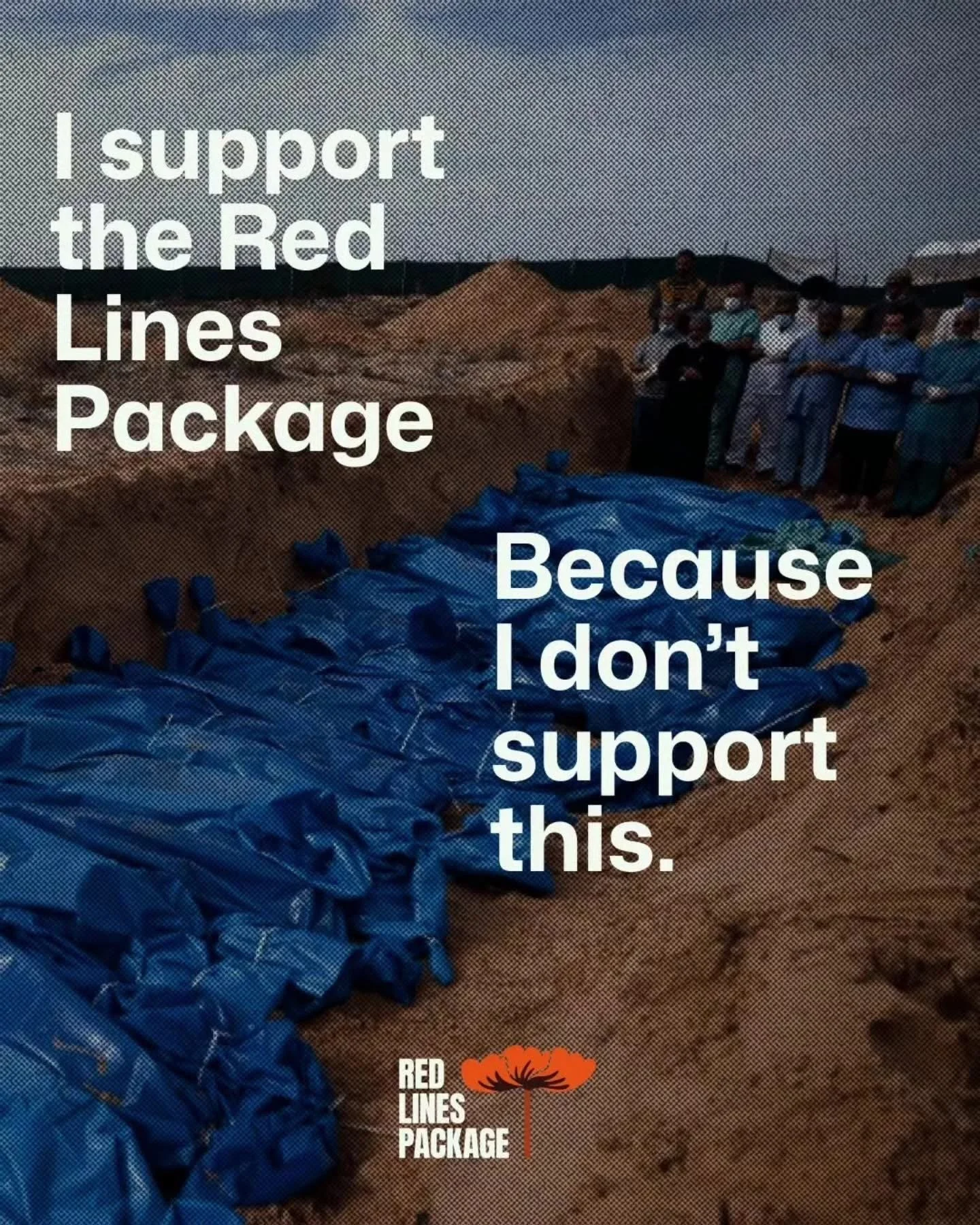

Australia has a legal duty under international law to prevent genocide and not be involved in crimes against humanity.
Right now, our laws don’t do enough to stop Australia from being complicit in these crimes through charity work, institutional partnerships, trillion-dollar investments, military trade, and embedded personnel.
The Red Lines Package would address these gaps, helping to protect our reputation and save human lives.

Passing this package will have an immediate impact and stop Australian arms exports and investments from contributing to human suffering.
The Red Lines Package is groundbreaking legislation that will heal societal divisions. It sends a clear message:
Public money should only be used for the public good and managed in a way that’s open, honest, and responsible.
Our governments should be answerable for how they use public money and resources.
No matter who the victims or perpetrators are, our country will not enable crimes.
Australia should not be involved in crimes overseas that cause deep suffering at home.
When something wrong happens, there should be real consequences.
Australia will act in line with the values it believes in.